culture
The National Roman Museum: Four Sites Telling the Story of Ancient Rome
Sculpture, frescoes and everyday objects are spread across Palazzo Massimo, Palazzo Altemps, the Baths of Diocletian and Crypta Balbi.
Listen in English · 3 min
How we reported this
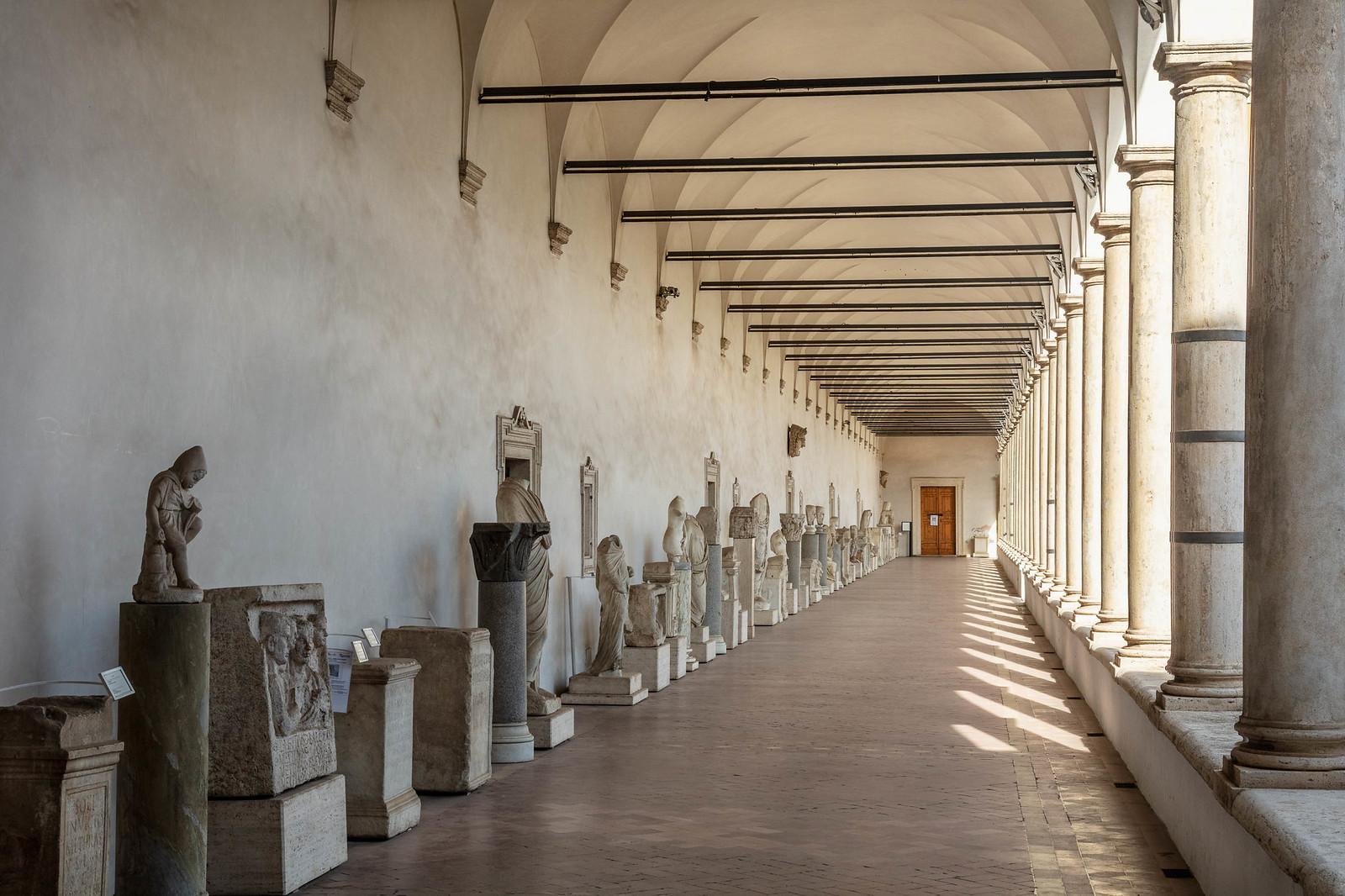
Many visitors to Rome never realise that one of the city's richest collections of ancient art is divided across four separate buildings, each within walking distance of Termini station. Together they form the National Roman Museum, a single institution that traces daily life, religion and art across the long span of the Roman world.
Palazzo Massimo is the flagship. Its upper floors hold some of the finest surviving Roman wall paintings, including the garden frescoes from the Villa of Livia, alongside mosaics and a celebrated series of marble and bronze sculptures. The coin collection in the basement is among the most comprehensive anywhere and rewards visitors with an interest in economic and political history.
Palazzo Altemps, near Piazza Navona, presents classical sculpture within a Renaissance palace, so that ancient statues are shown in frescoed rooms rather than modern galleries. The Baths of Diocletian, once the largest bath complex in the city, now house epigraphic and protohistoric collections and open onto a cloister attributed in part to Michelangelo. Crypta Balbi, the fourth site, is unusual in tracing how a single city block changed from antiquity through the medieval centuries, using archaeology to explain the layered history beneath Rome's streets.
Because the four sites share management, a combined ticket valid for several days lets visitors move between them at their own pace, and ticketing and current hours are handled through the museum's official service. Spreading the collection over more than one visit avoids the fatigue that a single vast museum can produce.
The proximity to Termini makes the National Roman Museum an easy first or last stop for travellers arriving or leaving by train. For anyone who wants to understand the objects behind the ruins scattered across the city, the museum supplies the context that the open-air sites alone cannot, turning fragments of stone into a connected story of how Romans lived, worshipped and governed.
Each of the four sites has its own character, which is part of the appeal. Palazzo Massimo feels like a classic art museum, Palazzo Altemps like a walk through a Renaissance home, the Baths of Diocletian like an encounter with monumental architecture, and Crypta Balbi like an archaeological detective story. Visitors who plan their days around these differences, rather than treating the museum as one long visit, tend to come away with a far clearer picture of the ancient city.