culture
The Capitoline Museums on Rome's Campidoglio Hill
On the square Michelangelo designed, the Capitoline Museums trace the city's history from ancient bronzes to Baroque painting.
Listen in English · 4 min
How we reported this
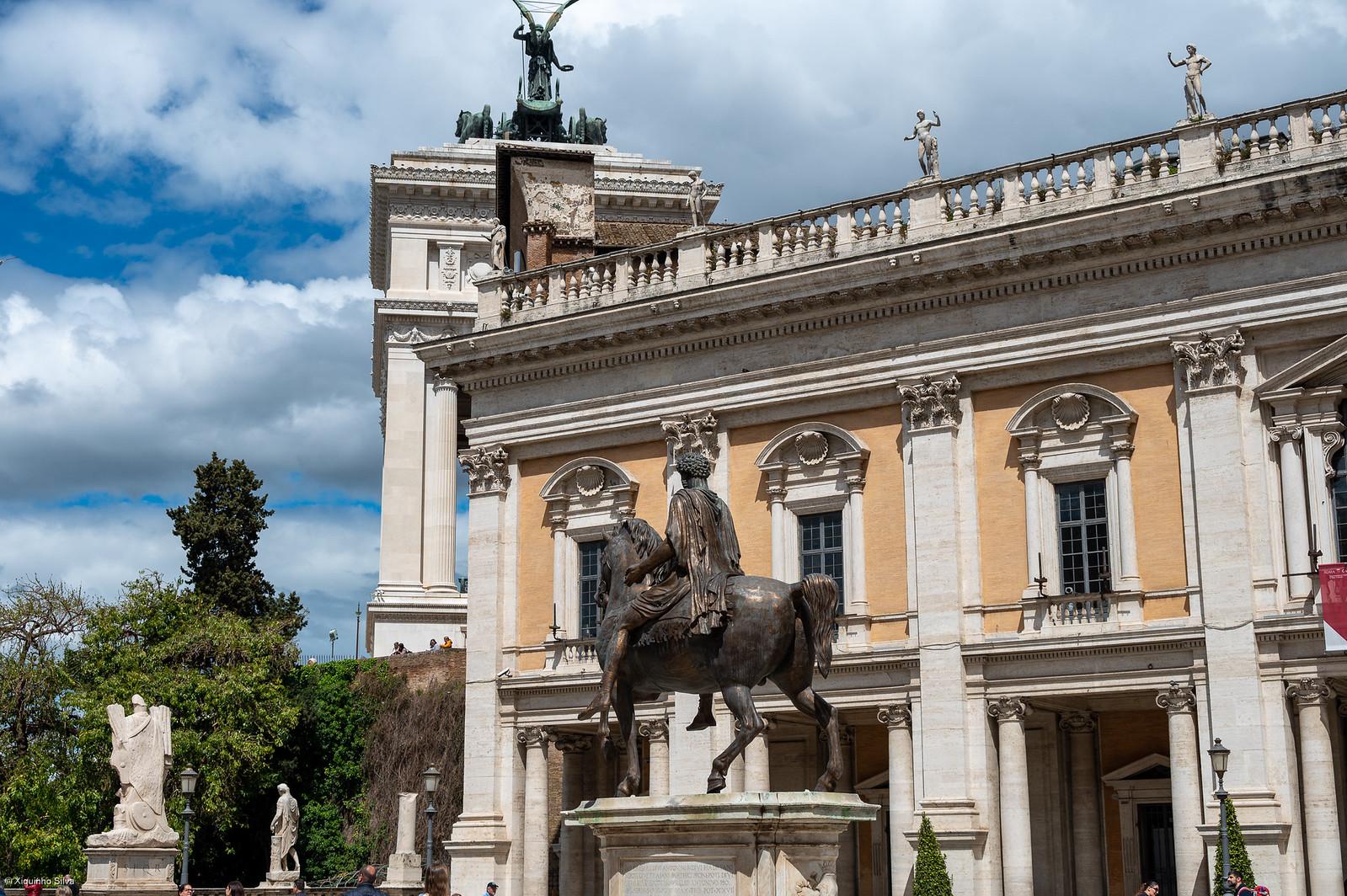
Set atop the Capitoline Hill on Piazza del Campidoglio, the Capitoline Museums occupy two palaces facing a square laid out to a design by Michelangelo. The collection was established in 1471, when Pope Sixtus IV gave a group of ancient bronzes to the people of Rome, and it has grown steadily since into one of the city's defining civic institutions, managed today by the Sovrintendenza Capitolina.
The museums are best known for a handful of works that have become emblems of the city. The bronze she-wolf, long associated with the legend of Romulus and Remus, stands among the ancient bronzes, while the original gilded equestrian statue of the emperor Marcus Aurelius is sheltered indoors, a weather-resistant copy occupying its place in the square outside. Visitors also come for the Dying Gaul, the colossal fragments of the statue of Constantine, and the frescoed halls of the Palazzo dei Conservatori.
Beyond the ancient sculpture, the Pinacoteca Capitolina holds paintings by artists including Caravaggio, Titian and Guercino, offering a route through later centuries of Italian art. An underground passage connects the two palaces and passes the Tabularium, whose arches frame a memorable view over the Roman Forum below.
The setting is part of the appeal. The Campidoglio was the religious and political heart of ancient Rome, and the modern museums sit directly above layers of that history. The panoramic terrace and the cafe reached from within the complex give visitors a place to pause with a view across the rooftops toward the Vittoriano and the forums.
Tickets and current opening hours are published on the museums' official website, and combined passes that cover several civic sites can be worthwhile for travellers planning to visit more than one museum in the Sovrintendenza network. Because the Capitoline sits a short walk from Piazza Venezia and the forums, it slots naturally into a day exploring the ancient centre, whether as a first stop or a quieter finish after the crowds of the archaeological area.
The museums also reward visitors who take an interest in how the collection has been assembled over the centuries. Successive popes and city administrations added works, and the arrangement tells a story not only about ancient Rome but about how the city has chosen to display and interpret its own past. Reading a few labels rather than hurrying between the highlights turns a quick photo stop into a genuine sense of the civic history behind the objects.